

What a Pressure Mat Reveals in Your Putting and Why It Matters
At Clubhouse Hawaii, we are always looking for ways to make putting analysis more precise, more useful, and more honest.
A lot of golfers think putting problems come down to one thing: the putter. Sometimes that is true. But a lot of missed putts start before the stroke even begins. They start with pressure, balance, and how the body moves during setup and motion.
That is exactly why adding a pressure mat matters.
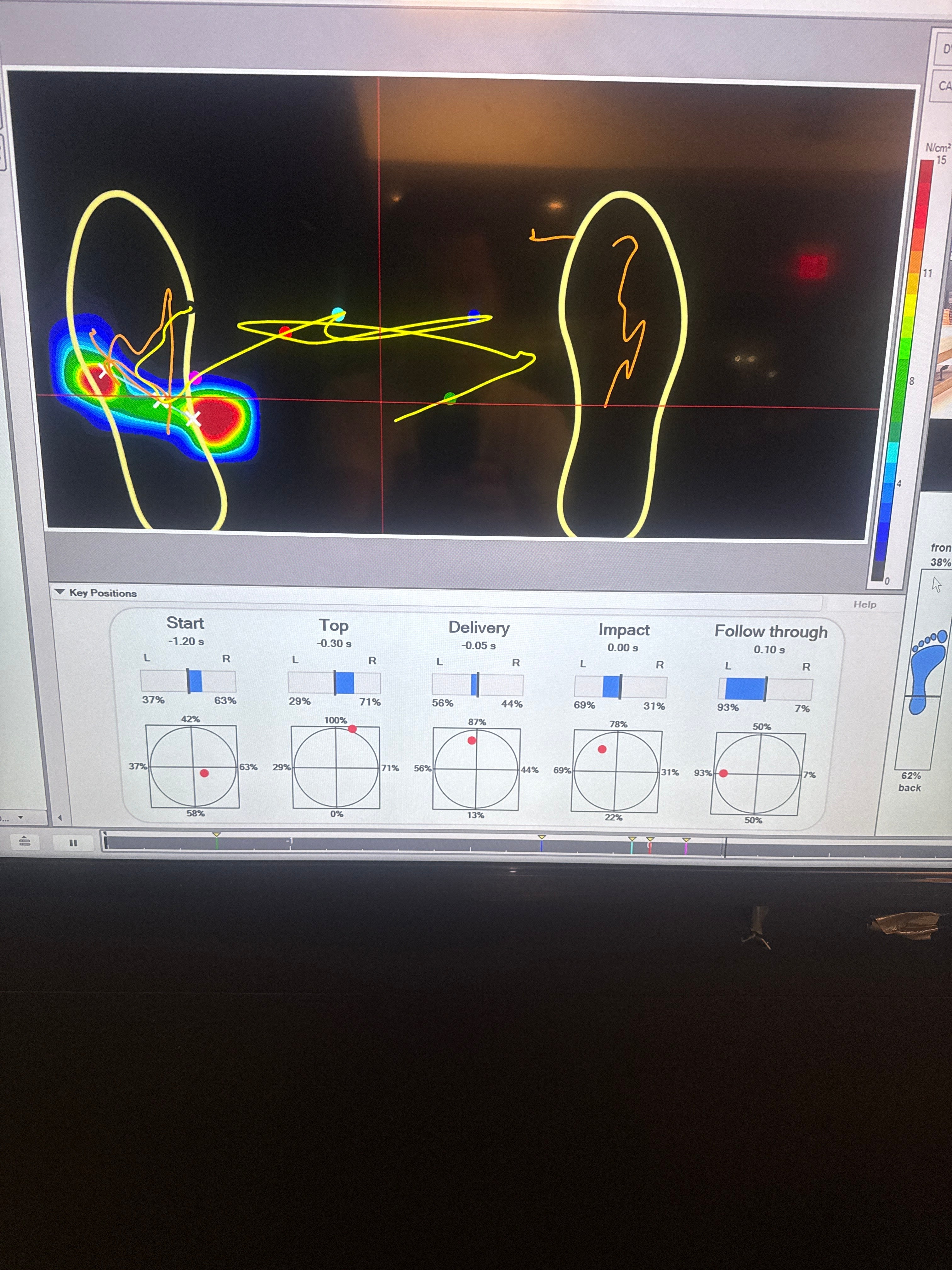
A pressure mat shows how your body is interacting with the ground while you putt. It reveals how much pressure you have in each foot, where your center of pressure sits at address, and how that pressure moves during the stroke. That sounds technical, but the point is simple: it helps show whether your stroke is built on stability or compensation.
Most golfers have never seen this information. They guess. They rely on feel. They assume they are centered when they are not. They assume they are stable when they are swaying. They assume their miss is all about the face angle when the real problem started with poor balance and inconsistent pressure.
That is where this becomes valuable.
What a Pressure Mat Can Reveal
1. Whether you are actually stable at setup
A player may look fine standing over the ball, but the pressure mat often shows a different story. Too much pressure in the toes, too much in the heels, too much on the lead side, or a setup that changes from putt to putt.
Those small variations matter. Putting is a precision skill. If your setup pressure changes every time, your stroke usually changes too.
2. If your stroke is moving more than you think
Many golfers believe they are making a quiet, repeatable motion. The pressure mat can show whether pressure stays stable or whether the player is drifting, rocking, or shifting during the stroke.
That movement may be subtle. It may not be obvious on video alone. But it can still change low point, face control, and strike quality.
3. Why your start line is inconsistent
Golfers often blame a push or pull on the putter path or face. Sometimes the real issue is poor ground control. If pressure moves too much during the stroke, the upper body often reacts. That reaction can change how the putter delivers to the ball.
In other words, the putter may not be the first problem. It may just be showing the result of a body-control problem underneath it.
4. Whether your setup matches your stroke style
Some players do better with a more centered pressure pattern. Others may benefit from a slightly different balance profile based on posture, eye position, arm hang, and stroke style.
The pressure mat helps identify what is natural, what is forced, and what gives the player the best chance to repeat the motion.
5. If your misses are mechanical or physical
This is important. A golfer might think they need a new putter, a new grip, or a new setup change. But if the pressure data shows poor stability and movement through the stroke, the first fix may be body control, not equipment.
That saves time. It saves bad decisions. And it leads to better coaching and better fitting.
Why This Matters More Than Most Golfers Realize
Putting is not just about reading greens and making good strokes. It is about repeatability. You need to return the putter consistently, control speed consistently, and start the ball online consistently.
You cannot do that well if the base underneath you is changing.
A pressure mat helps expose the hidden movement that many golfers never notice. It shows the difference between a stroke that is supported by balance and one that is constantly making small compensations.
That matters for several reasons:
Better diagnosis
Instead of guessing why putts are missed, we can identify whether the issue starts with setup, pressure distribution, movement, or stroke delivery.
Better coaching
Players get clearer feedback. They can feel one thing, but the data shows what is actually happening.
Better fitting
A putter fitting is stronger when we understand the player’s balance pattern, posture, and movement tendencies. Sometimes the wrong putter is being blamed for a setup issue. Sometimes the right putter helps reduce compensation. The pressure data helps separate those.
Better player awareness
A lot of improvement starts when a golfer finally sees what they have been doing all along.
Why Video Alone Is Not Enough
Video is useful. SAM PuttLab is useful. PuttStudio is useful. But pressure data adds another layer that fills in a major gap.
Video shows motion.
PuttLab shows stroke delivery.
A pressure mat shows what the body is doing against the ground.
That is a big deal.
If a player’s pressure is shifting during the stroke, that may explain why the video looks slightly unstable or why the measured stroke numbers keep changing. Without the pressure mat, you may see the result without fully understanding the cause.
With pressure data, the analysis becomes more complete.
Why This Is More Powerful at Clubhouse Hawaii
This is where the technology stack matters.
At Clubhouse Hawaii, pressure data does not sit by itself. It becomes far more valuable when combined with SAM PuttLab and PuttStudio.
SAM PuttLab measures what the putter is doing. It shows key stroke and impact data such as face angle, path, timing, rotation, lie, loft, and consistency patterns. That tells us how the putter is being delivered.
PuttStudio adds visual feedback and training. It helps golfers see aim, start line, pace, path, and performance tasks in a way that is much easier to understand and practice.
The pressure mat adds the missing link underneath the player. It shows how the body is balanced, where pressure is located at address, and whether that pressure stays stable or shifts during the stroke.
That combination matters because it gives a much more complete picture:
- Pressure mat: what the body is doing against the ground
- SAM PuttLab: what the putter is doing through the stroke and impact
- PuttStudio: how the player sees it, trains it, and improves it
That is the difference between basic putting help and real diagnosis.
A golfer may have a face-control issue, but the pressure data may show the problem starts with excessive movement in the feet and lower body. Another player may look unstable on video, but the pressure data may prove they are actually stable and the real issue is aim or face delivery. Another may need a different putter because their setup, posture, and stroke mechanics are fighting the current build.
Without all three layers, you are often guessing. With all three, you can separate cause from effect much faster.
That is exactly why this matters at Clubhouse Hawaii. We are not just looking at whether a putt went in or missed. We are looking at why.
What This Means for Golfers at Clubhouse Hawaii
At Clubhouse Hawaii, we are not interested in surface-level fitting or generic instruction.
We want to know why a player putts the way they do.
A pressure mat helps reveal:
- how stable you are over the ball
- whether your balance pattern supports a repeatable stroke
- whether your body is forcing compensations
- whether your misses are coming from setup, movement, or putter delivery
- what needs to change first
That makes lessons better. It makes fittings better. It makes practice more useful.
For some golfers, the pressure mat confirms that their setup is solid and the focus should be on face control or green reading. For others, it exposes the real reason they struggle with consistency. That is the point. Real data removes bad assumptions.
Why This Fits the Clubhouse Hawaii Approach
Clubhouse Hawaii is built around advanced analysis, real feedback, and better decision-making.
We already use high-level technology to help golfers understand performance in a way that basic range sessions and guesswork cannot. Adding pressure analysis strengthens that process because it gives us one more way to understand what is happening during the putting stroke from the ground up.
That phrase matters: from the ground up.
A putting stroke is not just hands and putter head. It starts with posture, balance, pressure, and stability. If those are off, the stroke often has to compensate. If those are clean, the player has a better chance to roll the ball consistently.
That is why pressure data matters. It is not just more information. It is better information.
Final Thought
Most golfers have never had their putting looked at this deeply.
They know whether the ball went in or missed. They may know if they pulled it or pushed it. But they usually do not know what their pressure was doing underneath them, whether they were stable, or whether their stroke was built on a reliable base.
That is what a pressure mat reveals.
And that is why it matters.
At Clubhouse Hawaii, we believe better putting starts with better diagnosis. When you can see what is really happening, you can stop guessing and start improving.
Book a Putting Evaluation at Clubhouse Hawaii
If you want to understand why you are missing putts, not just guess at it, Clubhouse Hawaii offers advanced putting analysis using technology that goes far beyond a basic lesson.
Our process can combine pressure data, SAM PuttLab, and PuttStudio to help identify what your body is doing, what the putter is doing, and what needs to change first.
Whether you need better setup, improved face control, more stability, or a proper putter fitting, the goal is the same: clearer answers and better putting.
Book a putting lesson or putter fitting at Clubhouse Hawaii and get real data on what your stroke is actually doing.
Clubhouse Hawaii
820 W Hind Drive #102, Honolulu, HI 96821
808-425-5128